
On the weekend I was invited to present at the second annual Port Hope Sustainability Expo. I got very excited about the topic I had chosen to share, and the fire it lit in my belly is still burning today. I’m going to share a pared down version of my talk with you here, because just try and stop me.
Art is Climate Action
My name is Shannon Linton and I am a musician, singer-songwriter, and music educator. I am also a climate advocate, and have lived on my fifth generation family farm most of my life. I am raising two kids there now with my husband, and all my various work and volunteer activities and hobbies seem to centre around community building and connection. I am honoured to be here today to talk with you about art and its vital importance as a climate action.
When I mention art and climate action, what do you think of?
Many of us think about art being used for activism, protest songs and graffiti, maybe picket signs. We also think of art as an awareness-raising tool, such as through fundraising concerts. We hear these days about festivals and artists trying to reduce their carbon footprint. These are important roles art can play, but they’re not what I want to talk about today.
Today I want to talk about art and storytelling as the most important tool we in the climate movement are not taking advantage of. Art and storytelling are imperative in moving the needle on public perception, which is what the climate fight desperately needs. Public perception is what influences policy, public perception is what causes businesses to change their practices, and public perception is what slowly moves an action or an idea - like driving an EV, for example - from the fringes to the mainstream.
And how does public perception change? Through storytelling. We humans make decisions and develop opinions based on emotion and fitting into a community, and art and storytelling are strongly linked to both of those things, when done well.
So how can it be done well? In my opinion the best way art can influence culture and public perception is not by banging us over the head with a speech or a message, but rather by placing itself inside a world that either highlights a problem or shows us a better option than our current reality.
The TV show Schitt’s Creek did this brilliantly in the realm of queer rights. Schitt’s Creek situated itself in a world that offered something better than our current reality.
Quoting from an article on Junkee.com:
“‘Writing David as a queer character was something that I just wanted to do, I didn’t do it to make a political statement, it was just who he was in my head,’ says Schitt’s Creek co-creator Dan Levy. ‘And I was shocked at how novel that seemed to people.’
Levy has talked about how he made the decision consciously to just let David be queer, without turmoil or strife from his sexuality, earlier on in the show. As a consequence, it very swiftly turned Schitt’s Creek into a whole new world for queer viewers — who like David, were able to just enjoy this tiny queer utopia without being overtly aware of having to enjoy it. The show is not preachy, it is not forceful — it simply is. It gently sets up, without comment, the potential for this reality.
As journalist Phillip Picardi explains: “When you see gay relationships on screen, they’re often portrayed through a lens of tragedy, or strife, or struggle, right? It’s like, look at all we had to overcome to love each other, you know? And so it felt like this moment where we got to see ourselves just being in love and being joyful.”
Schitt’s Creek has created a better world than the one we live in.”
Any marketing professional can tell you that stories do the heavy lifting of spreading a message. It is daunting to be the first voice speaking out about something, but one voice gets echoed or responded to by another, and in turn it gathers momentum. I’ll give you an example from my own life.
In July 2019 I read an article about the last known snail of a certain species. The snail, named George, was what scientists call an endling. The last of his kind - functionally extinct but still living. Reading the article made me feel weirdly empty and very sad.
I typed “endling” into a note on my phone. It felt important but I didn’t know what else to do with it yet. I couldn’t stop thinking about it, and more than a year later I wrote a song about a human endling, with the first line “the last of our kind will be a woman.” (Listen to that song here.)
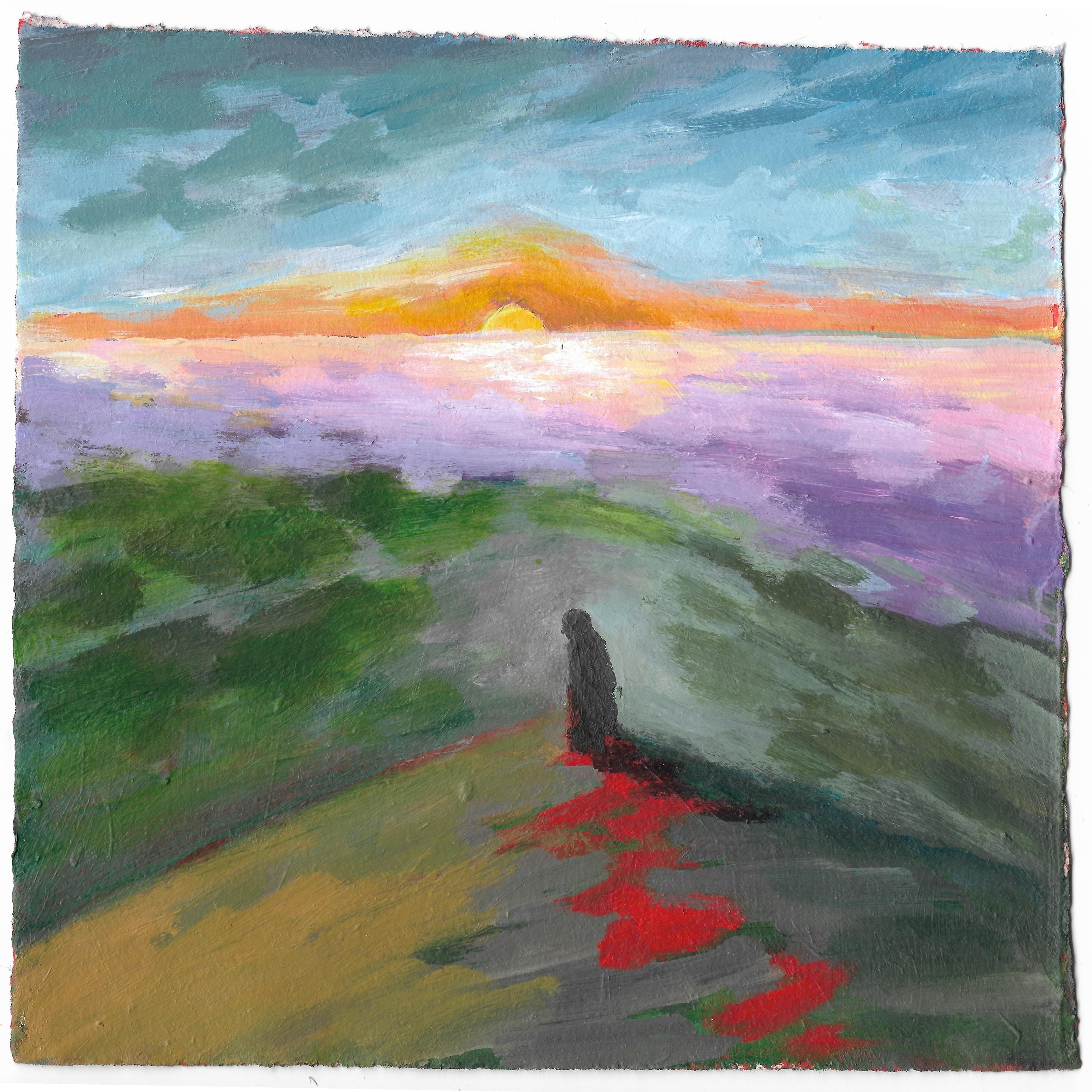
Fast forward to last month when I was at the University of Ottawa bookstore during an open house tour with my son. I love books so I was perusing the shelves, and my eye hit upon a book with that same title, Endling. I picked it up and read the description, and this was how it started: “Ukraine, 2022. Yeva is a loner and a maverick scientist who lives out of her mobile lab. She scours the country’s forests and valleys, trying and failing to breed rare snails… “
There is zero doubt in my mind that author read the same article, and we were both inspired enough to create something in response. Now there are two more pieces of culture out in the world telling the story of the endling, spreading that idea and gaining momentum in people’s hearts and minds.
So here’s the reason I’m here today. In her TIME Earth Awards Speech Dr. Ayana Elizabeth Johnson, my personal climate hero, said:
“...cultural change usually comes before policy change. This was true for civil rights, for gay marriage. And the people in this room shape culture. You have so much power to accelerate climate action, to inspire your crowds and shift the status quo. You can write romcoms and songs about climate solutions, design products for circularity, support key policies.
But what everyone definitely needs to do is speak up. Right now 2 out of 3 Americans rarely or never hear about climate on the news or on social media. And as long as that silence continues there’s no chance we’re going to solve this. And don’t let climate deniers scare you — they may be loud, and too many of them are running our government right now, but they are only 15% of Americans.” (Dr. Johnson is American, but the stats are still relevant to Canadians.)
Many of you are probably thinking “I am not one of those people she’s talking about, the people who shape culture.” I think you’re wrong. As a municipal councillor, as a non-profit organizer, as a small business owner, as a community member, you can and should tap into your artistic community’s skillset to spread your stories more effectively. And we are so lucky in this community because we are lousy with phenomenal artists of every stripe.
But don’t wait and cross your fingers for the artists around you to be inspired to tell these stories; artists are only human and they too have busy lives and need to make a living and put dinner on the table for their kids. Go out and actively connect with an artist to seek their help. We artists love a prompt, and many of us love collaboration. So hire us to tell the stories that need telling. Invite us to volunteer to build a narrative around your event. Ask our advice on how to “make the revolution irresistible,” as Toni Cade Bambara so eloquently put it.
Need a concrete example? I did too, and I found that some governments are directly engaging artists to advance civic goals, which I think is ingenious. I’ll give you a few examples from a research paper entitled “Artists Embedded in Government: Expanding the Cultural Policy Toolkit” published in 2023.
The first example:
“The Office of In Visibility is housed in the New York City Department of Sanitation’s Central Repair Shop, a massive vehicle repair complex in Queens. Inside, artist Sto Len makes sanitation work visible to promote a sustainable and healthy city for everyone, in which department staff spearhead this gallant effort on behalf of all New Yorkers. Len reactivates the department’s archival materials such as promotional videos, signage, and photographs in connection to present-day staff to reframe their work as humane and necessary to the daily lives of residents. Len is just one of the many artists who is working within government agencies, using civic systems as their artistic tools of creation to shift internal operations and public perception while promoting community engagement.”
And another:
“Approaching government collaborations as opportunities to elevate community voice and to focus on local needs, artist Frances Whitehead works at “the scale of the city” (Hart, 2018). Whitehead partnered with the city of Chicago from 2006 until 2016 and collaborated with architects, planners, and others to create work about urban infrastructure and sustainability, including a placemaking and adaptive reuse project that turned a former rail line into a multi-use park. In Gary, Indiana she developed Fruit Futures Gary Community Orchard Collaborative with community members (Whitehead, 2020). This project was a grassroots investment in the community, creating an agricultural infrastructure for residents that collaborated with the city as necessary but not as the primary partner.”
Artists, like all citizens, need a government that advances policies for the betterment of our health and well-being, and we need businesses and organizations doing work that is in our best interest as a society. Governments, businesses and organizations need artists to help them connect with their communities, build trust, and tell the stories of the work that needs to be done. So let the artists in your community use our creative superpowers to nudge cultural shifts toward the future we all want and need. Let us help create the cultural shifts that support the policies and practices that take us to that better future. Let us make the revolution irresistible, together.
xo
Shannon
Upcoming Shows

Saturday May 9th
3pm
Old Camborne Schoolhouse
Tickets $25
Please join me for a live taping of the final episode of the Make Like a Mother podcast with myself and my guests, Janita Wiersma and Trish Dryden. These conversations are changing me; they might do the same for you.
Yes, it’s Mother’s Day weekend. Yes, that was intentional. :)
Thanks for reading Joy Just Because! Subscribe for free to receive new posts and support my work.